


Last updated: September 23, 2026

Allianz Risk Barometer 2026:
Cyber and AI as major business risks
Cyber incidents created many headlines in 2025 and are still the biggest worry for companies globally in 2026, according to the Allianz Risk Barometer. The past year has also been a significant one for accelerated adoption of artificial intelligence (AI), which is reflected in its ranking as the biggest riser in the annual survey at #2.
As well as bringing huge opportunities, AI’s transformative potential and rapid evolution and adoption are also reshaping the risk landscape, making it a standout concern for firms of all sizes worldwide, alongside other more established threats. Still, close to half of respondents believe AI is bringing more benefits to their industry than risks. However, a fifth say the opposite, while the remainder believe the jury is still out.
For the first time ever, Business interruption is not in the top two risks, dropping to #3. Yet, this peril remains a significant concern given it can be a consequence of other risks in the global top 10.
Cyber incidents are by far the biggest company concern
In 2026, cyber incidents is the top global risk for the fifth year in a row, with its highest-ever score (42% of responses), and by a higher margin than ever before (+10%). It ranks as the main corporate concern in every region (Americas, Asia Pacific, Europe, and Africa and Middle East). The continued presence of cyber risk at the top of the Allianz Risk Barometer reflects a deepening reliance on digital technology at a time when the cyber threat landscape, and geopolitical, and regulatory environments, are fast evolving.
Large companies’ investments in cyber security and resilience have been paying off, ensuring they can detect and respond to attacks early. However, recent high-profile cyber-attacks underline the continuous threat for businesses of all sizes. Organizations are increasingly reliant on third party providers for critical data and services, while AI is supercharging threats, increasing the attack surface and adding to existing vulnerabilities. Smaller and mid-sized enterprises are increasingly being targeted and are under pressure due to a lack of cyber security resources.
AI bring risks as well as opportunities
AI has surged into the top tier of global business concerns, rising to #2 (32%) in 2026 from #10 in 2025 – the biggest jump in this year’s ranking. It is a big mover in all regions – ranked #2 in the Americas, Asia Pacific, and Africa and the Middle East, and #3 in Europe – and is a growing risk for companies of all sizes too, moving into the top three for large, mid-sized and smaller firms. As AI adoption accelerates and becomes more deeply embedded in core business operations, respondents expect AI-related risks to intensify, especially when it comes to liability concerns. The rapid spread of generative and agentic AI systems, paired with their growing real-world use, has raised awareness of just how exposed organizations have become.
Many Allianz Risk Barometer respondents increasingly see AI not only as a powerful strategic opportunity but also as a complex source of operational, legal, and reputational risk. In many cases, adoption is moving faster than governance, regulation, and workforce readiness can keep up. As more firms attempt to scale in 2026, they will face greater exposure to system-reliability issues, data-quality constraints, integration hurdles, and skilled talent shortages. Meanwhile, new liability exposures are emerging around automated decision-making, biased or discriminatory models, intellectual-property misuse, and uncertainty over who is responsible when AI-generated outputs cause harm.
Business interruption is strongly connected to geopolitical risks
2025 marked a shift towards protectionist trade policies and tariff wars that brought uncertainty to the world economy. It was also a year of regional conflicts in the Middle East and Russia/Ukraine, as well as border disputes between India/Pakistan and Thailand/Cambodia and civil wars in Africa – a trend which continues in 2026 with the US intervention in Venezuela. Geopolitical risks are putting supply chains under increasing pressure, but as risks rise, just 3% of Allianz Risk Barometer respondents view their supply chains as “very resilient”. In the past year alone, trade restrictions have tripled to affect an estimated US$2.7trn of merchandise – nearly 20% of global imports according to Allianz Trade – fueling companies exploring trends such as friendshoring and regionalization. These developments lead to a high-risk perception – 29% of respondents rank business interruption as a top peril, placing it at #3, although it drops a position year-on-year.
Unsurprisingly, political risks and violence climbs two places to #7, its highest-ever ranking. The closely linked risk of changes in legislation and regulation – which includes trade tariffs – ranks #4 globally, unchanged year-on-year but with an increase in respondents, driven by concerns over growing protectionism. In fact, global supply chain paralysis due to a geopolitical conflict ranks as the most plausible “black swan” scenario likely to materialize in the next five years, according to half of all respondents. Meanwhile, respondents also believe divergence will be a defining regulatory risk in 2026, as firms have to operate in a world where major jurisdictions are moving in different directions with regard to digital/AI, prudential, and sustainability rules.
As risk becomes more complex and interconnected, integrated resilience strategies can help to mitigate the impact. Companies now need to have forward-looking approaches to managing risk, including dynamic horizon scanning, scenario modelling and rigorous stress testing. An integrated resilience strategy can also help avoid unintended consequences as companies adapt their operations and supply chains in response to geopolitical risks and sustainability concerns. AI will also have a role to play in helping firms to adapt to the changing risk landscape.
Download the Allianz Risk Barometer
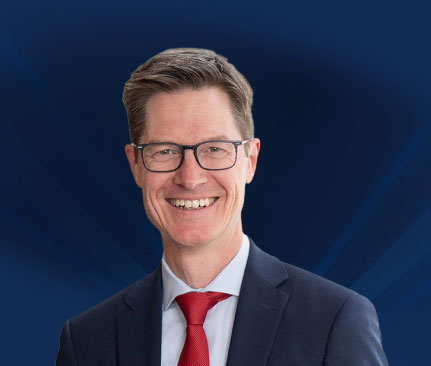
Three personal questions to Michael Bruch, Global Head of Risk Consulting Advisory Services at Allianz Commercial:
1. What was your first job?
At 16, I worked at a motorway service station just south of Munich, saving up for my motorcycle and driver’s license. After that experience, I avoided motorway service stations for years—let’s just say I got my fill of coffee refills and bratwurst for a lifetime!
2. What's the best advice you've ever received?
The best advice I’ve ever received is really a combination of three things, and they’ve shaped both my work and my life: First, “Don’t take yourself too seriously.” Life – and business – are much more enjoyable when you can laugh at yourself and not sweat the small stuff. Second, “Have fun at work and in your private life.” If you’re not enjoying the ride, what’s the point? I try to bring a sense of humor and lightness to everything I do. And third, “Surround yourself with people who you can learn from.” I’ve always believed that the best teams are made up of people who challenge and inspire each other. Some of my greatest lessons have come from colleagues, friends, and even the occasional competitor.
3. Who would you like to have as a dinner guest?
Robby Naish, hands down. I’ve been a passionate windsurfer since childhood and even built my own surfboards in the basement. After school, I flew to Hawaii to see if I’d get “stuck” there (spoiler: I came back, but only just!). While Robby is legendary for his windsurfing—winning his first world championship at just 13—what fascinates me even more is how he’s constantly reinvented himself. Robby’s not just a pioneer in windsurfing, but also in kitesurfing, stand-up paddling, and even in business, building his own successful watersports brand. He’s a true innovator, always curious, always pushing boundaries, and never afraid to try something new.
Further information
More news
About Allianz
The Allianz Group is one of the world’s leading insurers and asset managers, active in almost 70 countries and serving around 97 million private and corporate customers*. Our customers benefit from a broad range of personal and corporate insurance services, including property, life and health insurance, as well as assistance services, credit and global business insurance. Recognized for the seventh consecutive year as the number one global insurance brand in Interbrand’s Best Global Brands 2025 ranking, Allianz’s success is built on technology-enabled customer centricity – providing peace of mind, protection, and prevention for our customers and strengthening the resilience of individuals, communities, and societies. We are one of the world’s largest investors, managing around 791 billion euros** on behalf of our insurance customers. Furthermore, our asset managers PIMCO and Allianz Global Investors manage about 2.2 trillion euros** of third-party assets. Thanks to our systematic integration of environmental and social criteria in our business processes and investment decisions, Allianz received an MSCI ESG Rating of AAA (as of March 2026). In 2025, our 156,000 dedicated employees achieved a total business volume of 186.9 billion euros and an operating profit of 17.4 billion euros for our shareholders.
* As of December 31, 2025. Customer count reflects Allianz customers in consolidated entities that are part of the customer reporting scope only.
** As of June 30, 2026.
Cautionary note regarding forward-looking statements
As with all content published on this site, these statements are subject to our cautionary note regarding forward-looking statements: