
Article | December 2025
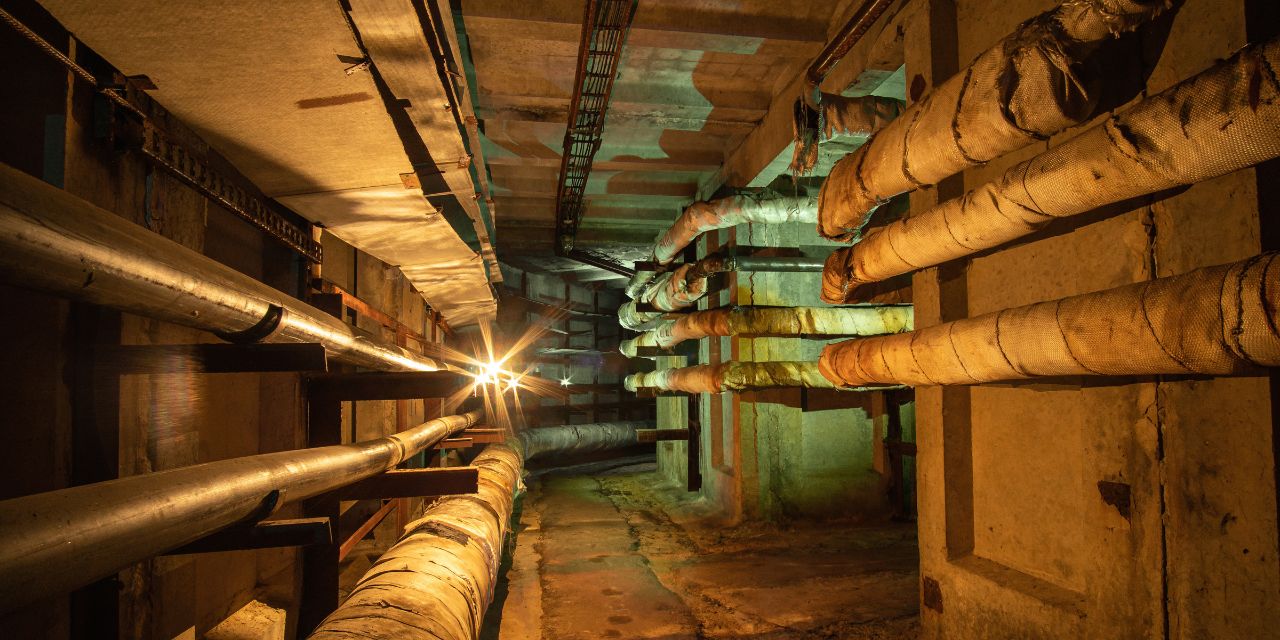
What lies beneath: hidden risks in pipes and pipelines
Whether they’re conveying safe drinking water or transporting hazardous materials, pipes and pipelines are an essential component of modern infrastructure. But what happens when they fail?
The 1 minute dialogue
- Concerns are mounting around the world about aging infrastructure assets, with fears that some pipe networks are reaching critical failure points.
- Human error, particularly excavation, as well as cyber crime, sabotage and theft, all pose risks to pipes and pipelines.
- Pipelines can be damaged by geohazards and natural catastrophes, which have intensified with climate change, while more projects are being commissioned in complex or remote terrains.
- Artificial intelligence is increasingly important in enabling companies to act before accidents happen and allows for greater accuracy in monitoring over vast distances.
In 2019, a gas leak in a Paris bakery caused a massive explosion that shattered windows, overturned cars, claimed the lives of four people, and injured more than 200 others.
On the US East Coast, a cyber-attack in 2021 forced the shutdown of the Colonial Pipeline, which carries 45% of the region’s supply of diesel, petrol and jet fuel, causing disruptions and prompting panic buying.
In the Baltic Sea off the coast of Denmark, an act of suspected sabotage in 2022 triggered a series of explosions in the Nord Stream gas pipelines. The incident released nearly half a million tonnes of methane into the atmosphere, undermined European energy security, inflated energy prices, and heightened geopolitical tensions.
These three events highlight the catastrophic consequences of pipeline damage. From local tragedies to international incidents, our domestic lives and economic activity can be brought to a standstill by failures in the arterial networks that circulate not only fuels, but water, steam, gases, chemicals, and waste.
Oliver Lauxmann, Global Practice Group Leader, Chief Underwriting Office – Liability, at Allianz Commercial, explains what’s at stake: “Whatever the cause, the results can be the loss of essential services, the evacuation of homes and businesses, reputational damage and economic losses for companies affected, contamination concerns, and localized or widespread disruption, not to mention threat to life.”
Although pipelines are one of the safest modes of transport for commodities compared to road, rail or ship, Lauxmann notes large volumes are often conveyed in pipelines across industrial, natural or urban areas, so failures can have far-reaching consequences: “Depending on the substance, accidents can result in fires, explosions, toxic releases, vapor clouds, and asphyxiation. And, even if no injuries occur, there can be significant and long-lasting environmental damage.”
There can be a psychological impact too, Lauxmann adds, arising from trauma or the upheaval of displacement.
Aging assets and vulnerabilities
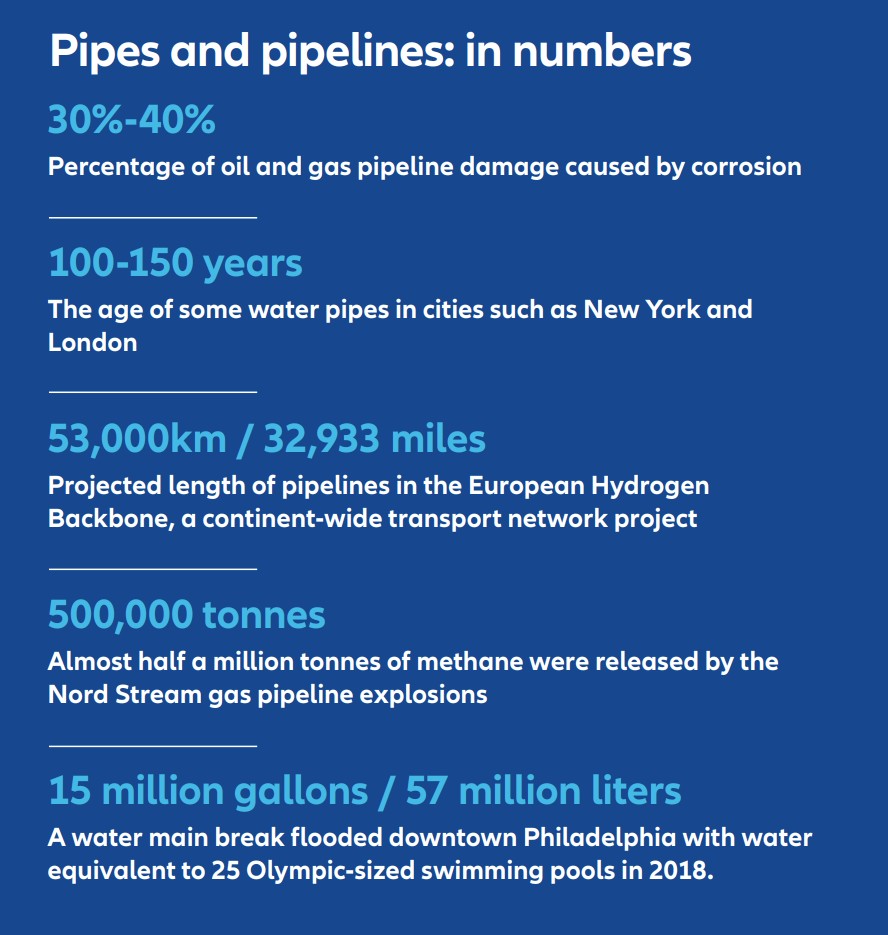
Concerns about aging infrastructure assets have been mounting in many cities around the world, and pipes are no exception. In New York, some water pipes are around 100 years old, while in London they can be as old as 150. There are fears aging networks are reaching critical failure points. In 2018, a water main built in the 1920s gushed 15 million gallons of water on to the streets of downtown Philadelphia, the equivalent of 25 Olympic-sized swimming pools [1]. The city’s mains and sewers have been built over a 200-year period and are continually being replaced.
Corrosion is a leading cause of all pipeline failures, accounting for as much as 30-40% of damages in oil and gas networks globally, says José Luis Pallarés, Senior Risk Consultant, Liability, at Allianz Commercial: “Corrosion can occur internally due to the corrosive nature of the transported substance and the pipeline material, or externally from factors like abrasive seawater or excessive moisture. It can lead to cracks and holes, allowing substances to leak or explode, potentially causing contamination or fires if flammable materials reach an ignition source.”
The human factor
While aging infrastructures might be creaking, Pallarés says it is human error during excavation that is the most common cause of pipeline damage: “Very often, the damage is done by workers who are either unaware or ill-informed about the conditions they are digging in. Explosions have occurred because of poor communication between construction companies and local authorities about pipe locations. Even with the best surveillance technology, we see too many of these incidents translate into significant losses.”
Human error can compromise pipeline integrity, including mistakes relating to pressure management, valve alignment, or failure to detect ruptures. A 2016 slurry pump failure at an alumina refinery in Jamaica was caused by a water hammer event, which led to a rupture and severely injured a technician [2]. The incident highlighted the importance of pressure management and robust materials with pipelines that transport hazardous substances – in this case a hot, caustic fluid.
The incorporation of cyber-physical systems in pipeline operations also introduces challenges, as they are vulnerable to outages and cyber-attack. The integration of machinery, digital functions, and monitoring systems has increased the attack surface for cyber crime. Pipeline operators are now targeted by cyber criminals as key players in major supply chains, and geopolitical tensions raise the prospect of state-sponsored activity.
Natural catastrophes and geohazards
Pipelines can be damaged by wildfires, flooding, earthquakes, landslides, or extreme temperatures – threats that have intensified with climate change. In 2020, after weeks of unusually warm weather, a storage tank in Russia’s Arctic north collapsed and leaked 21,000 tonnes of fuel into rivers when the permafrost beneath its supports melted. A regulator found faults in the tank’s construction and maintenance, and Norilsk, the mining company involved, was fined $2bn [3].
Thaw-related subsidence and unstable earth and rock can compromise structural integrity in other Arctic or permafrost regions, including Alaska and northern Canada, according to Nicole Baker, Team Leader, Environmental Impairment Liability, at Allianz Commercial.
“In the US, vulnerable regions include the Gulf Coast, which is prone to hurricanes and flooding, and California, which faces earthquakes and landslides. Both regions have dense energy infrastructures in ecologically sensitive areas with many water crossings. Mountainous terrains can present risks to structural integrity from landslides and river scour – when flowing water erodes sediment around structures, undermining their stability.”
Extreme temperatures in winter and summer can strain assets in the Canadian provinces of Alberta and Saskatchewan, as well as the Great Plains region, which spans the US-Canadian border. This is especially true for the extensive networks of crude oil pipelines, which can stretch for thousands of kilometers.
“The risks of climate and geohazards are likely to intensify in the future, which will increase environmental exposures and the mechanical strain they place on assets,” says Baker. “We expect to see more frequent and severe flooding, landslides, wildfire and river scour. It’s also likely new pipeline projects will be commissioned in complex or remote terrains, where natural hazards are heightened.”
Sabotage and security vulnerabilities
Theft and the illegal tapping of fuel pipelines is a major problem in some regions and is exacerbated by organized crime. An explosion in the Mexican town of Tlahuelilpan in 2019 killed 137 people, after crowds gathered to collect gasoline from a ruptured pipeline. Third-party interference is also a danger in Nigeria, where incidents of theft or sabotage can incur annual costs in the billions of dollars. Environmental cleanup efforts can be complicated by mangrove ecosystems and swamps.
“Geopolitical sabotage risk has also been on the radar in recent years, especially in the aftermath of the Nord Stream incident,” adds Baker. “The risk is currently heightened in the Baltic-North Sea Corridor, where any response is complicated by the ocean environment and the need for cross-border coordination.”
Different materials, different risks
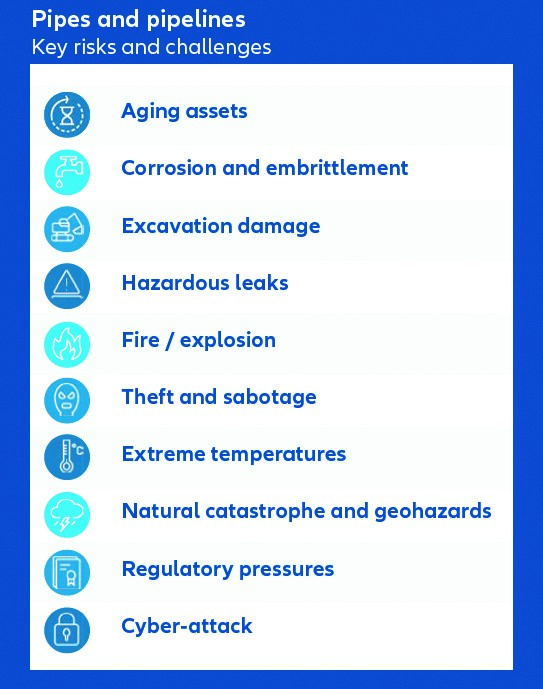
Risks and liabilities vary according to the product being transported. Heavy crude oil or dilbit (diluted bitumen) persist in the environment, which complicates cleanup operations, while refined products pose fire and explosion risks, as well as risk of groundwater contamination. Toxic chemicals, such as ammonia, bring public health liabilities, and carbon dioxide can cause asphyxiation. Wastewater releases drive ecological and public health claims, and steam, used in district heating, carries burn risks.
New product uses introduce new exposures. The rise of carbon capture and storage as part of the energy transition has seen growing demand for pipelines to transport carbon dioxide so it can be stored underground.
“The problem with a carbon dioxide release is it can be difficult to detect, but the consequences can be grave. CO2 can displace oxygen, particularly in confined spaces, and cause asphyxiation,” explains Pallarés. In 2020 a rupture in a carbon dioxide pipeline in Mississippi released a large CO2 cloud, causing asphyxiation symptoms in residents [4]. The incident highlighted the need for robust leak detection, emergency response planning, and community awareness.
Hydrogen is another gas predicted to play a role in the shift towards sustainable energy, as illustrated by the European Hydrogen Backbone, which aims to create a continent-wide hydrogen transport network using repurposed gas pipelines. The initiative envisages 53,000km of pipeline infrastructure operational in 28 countries by 2040 [5].
“Hydrogen has been used in industry for decades and its risks are well known, including fire, explosion, and embrittlement, which can weaken pipes,” says Pallarés. “Hydrogen molecules are tiny so they leak easily, plus the gas has no odor and its flames are invisible, which makes leak detection challenging. Repurposing gas pipelines for hydrogen will not be straightforward because the steel pipes used to transport natural gas are vulnerable to hydrogen-induced embrittlement.”
Regulatory scrutiny intensifies
As tangible risks continue to challenge pipeline operators, regulations are tightening in many jurisdictions. Compliance requirements address integrity management, leak detection, rupture mitigation, methane emissions, habitat protection, and reporting on climate and ESG (environmental, social and governance).
“Regulatory scrutiny and investor reporting pressures are increasing transparency and the potential liabilities associated with climate-related pipeline risks,” says Baker. “However, with stricter reporting requirements, and modern monitoring and detection methods, events can be caught earlier and their severity reduced.”
Legal disputes often focus on the environment, the rights of indigenous people, and security concerns. Baker adds there has been a shift towards pollution and climate-related liabilities. Social inflation increases the risk of class actions and large settlements, especially in high consequence areas (HCAs), where incidents can severely impact human health or the environment, leading to substantial penalties and cleanup costs.
Risk mitigation in an evolving environment
Modern methods for reducing pipeline risk focus largely on leak detection. These can include aerial surveillance with drones or helicopters equipped with cameras and sensors, manual inspections for visible signs of leaks or damage, fiber optic systems that detect vibrations and temperature changes, and even patrols by dogs trained to sniff out leaks.
Two of the most common technologies used are pigs – devices that travel through pipelines to check for corrosion and cracks and take photos – and SCADA systems, which gather real-time data on flow, pressure, temperature and other parameters.
“Artificial intelligence (AI) is increasingly important in enabling companies to act before accidents happen,” says Pallarés. “AI tools can learn from processing huge volumes of information – more than a human ever could – and comparing that data with standard situations to detect deviations from normal parameters. AI also allows for greater accuracy over vast distances. In pipelines stretching over 1,000km, often in inaccessible terrain, it is important to pinpoint the location of a potential fault.”
The importance of information sharing
An up-to-date understanding of the risks operators face is essential for emergency preparedness plans, says Lauxmann. “They must be able to detect many different scenarios and mitigate them in the shortest possible time. Emergency plans need to be regularly updated with the latest sensor data and the workforce trained to detect small anomalies for early detection of failures.”
Pipelines present multiple risks that can impact many areas of business, says Lauxmann, and specialist risk consultants can help companies enhance their safety management systems with tailormade solutions. At Allianz Commercial, these consultants can be drawn from a team of energy, marine, cyber, property, construction, or liabilities specialists.
“We want to maintain a dialogue with all our clients in this space,” says Lauxmann. “That includes the construction and energy companies involved, the technology and manufacturing firms, the sustainability experts, logistics managers, safety consultants. This is an extensive risk landscape that spans multiple industries, exists in various geographies, and crosses national borders. Collaboration will be essential in identifying, assessing and addressing risks as they evolve.”
References
[1] CBS News, Business Owners Describe ‘War Zone’ After Center City Water Main Break, July 3, 2018
[2] ResearchGate, Waterhammer Event in Alumina Refinery Causes Catastrophic Slurry Pump Failure, April 2023
[3] Bloomberg, Mining Giant Ordered to Pay $2 Billion Fine for Fuel Spill in Arctic, February 5, 2021
[4] Calgary Herald, This is what can happen when a carbon pipeline bursts, October 28, 2025
[5] European Hydrogen Backbone, European Hydrogen Backbone grows to meet REPowerEU’s 2030 hydrogen targets
Photo: Adobe Stock



All the latest news, reports and hot topics








Sign up to the newsletter
Keep up to date on all news and insights from Allianz Commercial