Survey: The threats companies consider to be most plausible in the next five years

Business Black Swans
Report | March 2026
Interconnectivity and geopolitical instability raise fears of supply chain and cyber Black Swans
Despite seeming predictable in hindsight, Black Swans are unexpected or unforeseen events that are highly disruptive and economically damaging. Examples include the 2001 World Trade Center attacks in the US, the 2008 global financial crisis and the Covid-19 pandemic. Allianz Research estimates cumulative global GDP losses from the pandemic between 2020 and 2023 to be in the region of US$12trn. In addition to the huge financial and business costs, such events typically have long-lasting implications, resulting in geopolitical and societal shifts that continue many years after the initial event.
Supply chain paralysis and a global internet outage are seen as the two most plausible Black Swan scenarios in the next five years, according to a survey of more than 3,000 business and risk management experts.
Rare, high-impact events like these are perceived as being increasingly plausible in a world of interconnected supply chains, digital dependency, geopolitical volatility and trade wars.
Geopolitical noise masks risks from high impact climate, health and technology risks.
Organizational agility, resilience and integrated risk management are key to surviving Black Swan events, areas where companies are increasingly seeking external expertise and independent risk insights.
Rare, high-impact Black Swan events are set to become more frequent and damaging in today’s highly interconnected, yet geopolitically unstable, world, explains Michael Bruch, Global Head of Risk Consulting Advisory Services, Allianz Commercial:
“Black Swan events are now more likely – and far more consequential – than a decade ago. As physical and digital supply chains become tightly interwoven, disruptions now cascade at unprecedented speed. In today’s fragmented geopolitical environment, companies must strengthen resilience and integrated risk management to withstand the next seismic shock.”
“Preparing for a Black Swan risk involves bracing for the improbable possibility, necessitating a deep comprehension of the intricate web of interconnected risks, the probabilistic nature of modeling tools, and a touch of imaginative foresight,” adds Kostas Papapetridis, Regional Head of Risk Consulting, North America, Allianz Commercial.
Global results: Which of the following Black Swan scenarios do you consider most plausible for your company in the next five years?
The figures in this infographic represent how often a risk was selected as a percentage of all survey responses from 3,338 respondents.
All respondents could select up to three risks per industry, which is why the figures do not add up to 100%.
Source: Allianz Commercial
Source: Allianz Commercial
Over half of all respondents (51%) believe that global supply chain paralysis resulting from a geopolitical conflict is the most plausible Black Swan scenario which could occur.
A global internet outage caused by a major cyber-attack or communication failure, disrupting operations worldwide (47%) ranks second.
The sudden collapse of a major financial institution or a sovereign debt crisis is third (30%).
Supply chain paralysis and global outages rank as the most feared Black Swan events
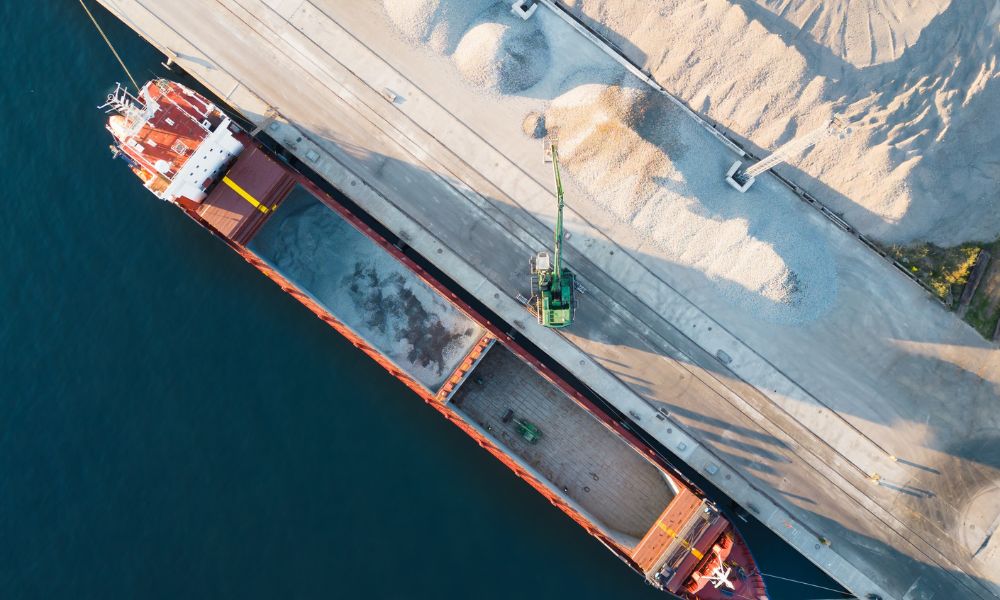
Global supply chain paralysis due to a geopolitical conflict halting the movement of goods and raw materials is considered the most plausible Black Swan scenario globally in the next five years (51% of responses), according to new Allianz Risk Barometer analysis, which surveyed 3,338 risk management experts from almost 100 countries and territories.
This scenario is perceived as being the most plausible Black Swan event by European (57%) and Asia Pacific (48%) respondents, and by those in the US (52%) and China (51%), for example. It ranks even higher in export-led Germany (71%). It is also seen as the leading scenario by large companies (>US$500mn annual revenue) and by most sectors, including manufacturing, transport, heavy industry, retail, food, and consumer goods.
A global internet outage caused by a major cyber-attack or technology failure, disrupting digital operations and communications worldwide, is regarded as the second most plausible Black Swan scenario globally (47%). It is the most feared event for respondents in the Americas (49%) and Africa and Middle East (51%) regions, as well as in the UK (69%), Brazil (48%), Colombia (55%), India (42%) and Australia (45%), for example. Global internet outage also ranks top according to respondents from smaller companies (<US$100mn annual revenue) and those from the financial services, professional services, government, technology, telecoms, media, entertainment, and hospitality sectors.
Supply chain paralysis and global internet outages are front of mind for many businesses, reflecting the critical nature of global supply chains and digitalization in an increasingly volatile geopolitical climate. They are also the scenarios that are likely to manifest sooner than other plausible scenarios, such as a climate, health, or technology-related global crisis, which are seen as more distant and longer-term by respondents.
“The unpredictable geopolitical landscape and persistence of cyber-attacks and outages are factors in respondents perceiving that the supply chain paralysis and internet outage scenarios are more likely to occur sooner than others,” says Michael Bruch, Global Head of Risk Consulting Advisory Services, Allianz Commercial. “Despite progress in cyber and supply chain resilience, threats continue to evolve. Many organizations still lack sufficient visibility into their dependencies and vulnerabilities embedded in their physical and digital supply chains. Understanding these linkages is the foundation of resilience. Yet their growing opacity is often underestimated.”
Differences between large and small companies
While companies of all sizes are worried about global supply chain paralysis (ranked second by smaller companies), mid-sized and smaller companies rank the sudden collapse of a major financial institution or a sovereign debt crisis, for example, as the third most plausible scenario, while larger companies are more concerned about the risk of simultaneous climate disaster and energy grid failure.
Large and mid-sized companies are likely less concerned with the risk of internet outages than smaller companies because they are more diversified and have their own IT and cyber security departments, explains Daniel Muller, Head of Emerging Risks and Trends, Allianz Commercial:
“Smaller companies often find it difficult to invest in resilience to the same extent as larger organizations, because they lack dedicated resources and specialized expertise in areas such as cyber security and supply chain management. As a result, they remain more vulnerable to prolonged digital or operational disruptions. Insurers can play a critical role by helping these businesses strengthen their cyber resilience and make more informed decisions when assessing and selecting critical suppliers.”
Large companies*
Top 3 responses
Respondents could select up to three scenarios. Number of respondents: 1,471.
*>US$500mn annual revenue
Mid-sized companies*
Top 3 responses
Respondents could select up to three scenarios. Number of respondents: 816.
*US$100mn+ to US$500mn annual revenue
Smaller companies*
Top 3 responses
Respondents could select up to three scenarios. Number of respondents: 1,051.
*<US$100mn annual revenue
Photo: Adobe Stock
Our experts
Allianz Commercial's Risk Consulting experts around the world provided their insights and knowledge to this report.